





Brake Fluid Service in Sparta
Brake Fluid Service in Sparta, TN
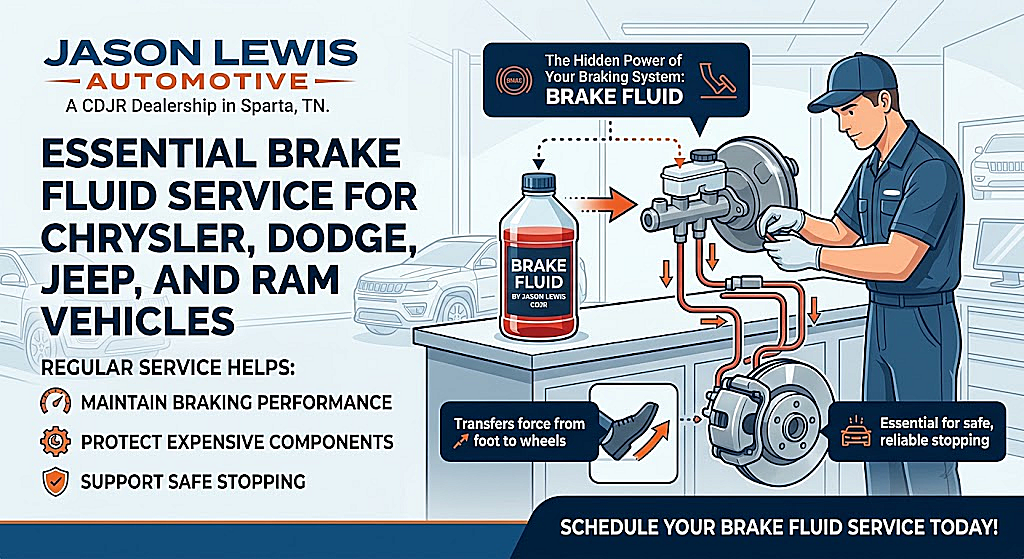
The Fluid Behind Your Vehicle's Stopping Power
When most drivers think about their brakes, they think about brake pads and rotors. Yet one of the most important components of the entire braking system is something many people never see: brake fluid.
Brake fluid transfers the force from your foot on the brake pedal to the brake components at each wheel. Without properly functioning brake fluid, your vehicle cannot stop as designed.
Regular brake fluid service helps maintain braking performance, protect expensive brake components, and support safe, reliable stopping in all driving conditions.
Schedule your brake fluid inspection today.
What Is Brake Fluid?
Brake fluid is a specialized hydraulic fluid that allows your braking system to function.
Without brake fluid, the pressure created by your foot would never reach the wheels.
Think of brake fluid as the messenger that carries your braking command throughout the system.
- Brake Pedal
- Brake Fluid
- Brake Lines
- Brake Calipers
- Brake Pads & Rotors
- Vehicle Slows and Stops
Why Brake Fluid Matters
Many vehicle owners are surprised to learn that brake fluid is not a lifetime fluid.
Over time, brake fluid gradually absorbs moisture from the atmosphere, even in a sealed braking system. As moisture levels increase, the fluid becomes less effective at handling the high temperatures created during braking.
This can lead to:
Just as engine oil protects your engine, clean brake fluid helps protect critical brake system components.
?? Did You Know?
Brake fluid often needs replacement because of age rather than mileage.
Even vehicles that are driven infrequently can experience brake fluid deterioration over time as moisture gradually accumulates within the system.
How Does Brake Fluid Deteriorate?
One of the most common misconceptions is that brake fluid is replaced because it becomes dirty.
In reality, moisture contamination is usually the primary concern.
New Brake Fluid vs. Aged Brake Fluid
| New Brake Fluid | Moisture-Contaminated Brake Fluid |
|---|---|
| Higher boiling point | Lower boiling point |
| Consistent braking performance | Potential performance reduction |
| Better protection against corrosion | Increased corrosion risk |
| Stable pedal feel | Potential for inconsistent feel |
| Supports proper system operation | Increased stress on components |
As brake fluid absorbs moisture, its ability to withstand heat decreases. This becomes especially important during heavy braking, mountain driving, towing, and stop-and-go traffic.
Signs Your Brake Fluid May Need Service
Some vehicles display symptoms when brake fluid has deteriorated, while others may not show obvious warning signs. Possible indicators include:
-
Soft or Spongy Brake Pedal
-
Inconsistent Pedal Feel
-
Longer Stopping Distances
-
Dark or Discolored Fluid
-
Brake Warning Light
-
Manufacturer-Recommended Service Interval Reached
Because brake fluid condition isn't always visible from the driver's seat, regular inspections are important.
What Happens During a Brake Fluid Service?
Customers often ask: "What exactly are you doing during a brake fluid service?"
A brake fluid exchange removes aging fluid and replaces it with fresh manufacturer-approved brake fluid.
Our brake fluid service includes:
- Inspection of brake fluid condition
- Inspection of the fluid reservoir
- Removal of old brake fluid
- Replacement with fresh brake fluid
We also complete:
- Inspection of brake hydraulic components
- Inspection for leaks
- Bleeding air from the system as needed
- Verification of proper brake operation
The goal is to restore the fluid's ability to perform as designed while helping protect the braking system from moisture-related damage.
How Long Does Brake Fluid Service Take?
Brake fluid service is typically one of the quicker maintenance procedures performed on a vehicle.
| Service | Typical Time |
|---|---|
| Brake Fluid Inspection | 15-30 Minutes |
| Brake Fluid Exchange | Approximately 1 Hour |
Actual service times can vary based on vehicle design and brake system condition.
Brake Pads vs. Brake Fluid: What's the Difference?
Many drivers understand brake pad replacement but aren't sure why brake fluid service is also recommended.
| Brake Pads | Brake Fluid |
|---|---|
| Wear through friction | Deteriorates with age and moisture |
| Visible during inspection | Often invisible to the driver |
| Create stopping force | Transfers stopping force |
| Replaced when worn | Replaced when contaminated or aged |
| Commonly understood | Frequently overlooked |
Why Both Are Important
Think of brake pads as the muscles of your braking system and brake fluid as the communication system.
Even excellent brake pads cannot perform properly if the hydraulic fluid delivering braking force has deteriorated.
How Often Should Brake Fluid Be Replaced?
Service intervals vary by manufacturer and vehicle application. Factors that can influence brake fluid condition include:
Our technicians can inspect your brake fluid and recommend service based on both its condition and your vehicle manufacturer's guidelines.
Towing Creates Heat
Drivers who tow boats, campers, enclosed trailers, horse trailers, or work equipment place additional demands on their braking systems.
The additional weight creates more heat during braking, placing greater stress on brake pads, rotors, and brake fluid.
Maintaining fresh brake fluid can help support consistent braking performance during demanding driving situations.
?? Did You Know?
Many drivers focus on brake pad wear but overlook brake fluid condition.
Fresh brake fluid can help maintain braking consistency and protect expensive components such as calipers, master cylinders, and ABS system components.
Frequently Asked Questions
(Click + for the answer)
New brake fluid is typically clear to light amber. As it ages, it often becomes darker.
Yes. Brake fluid naturally absorbs moisture over time, which can affect its performance and protective properties.
Adding fluid may address a low fluid level but does not remove moisture or contamination already present in the system.
Brake fluid maintenance helps support braking performance and protect expensive hydraulic brake components from corrosion and wear.
Some drivers notice a firmer or more consistent brake pedal feel, especially if the existing fluid has significantly deteriorated.
Protect Your Entire Brake System
Brake fluid plays a critical role in your vehicle's ability to stop safely and consistently. Regular brake fluid service can help maintain braking performance, support system reliability, and protect important brake components from premature wear.
Whether you're following your maintenance schedule or simply want to know the condition of your braking system, our factory-trained technicians are here to help.