





Brake Inspection Service in Sparta, TN
Brake Inspection Service in Sparta, TN
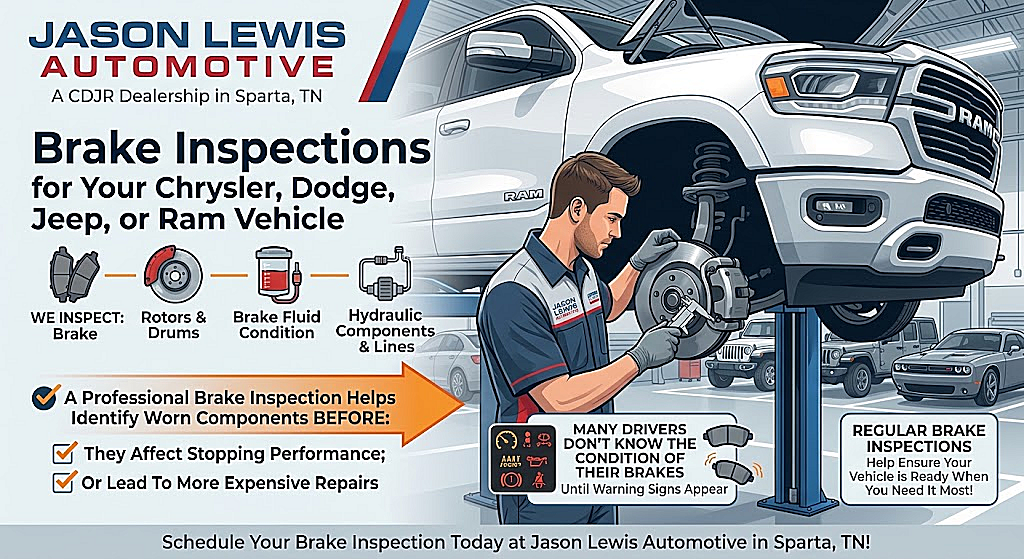
Know the Condition of Your Brakes Before They Become a Problem
Your vehicle's braking system is one of its most important safety systems, but unlike engine oil or tires, brake wear isn't always easy to see.
Many drivers don't know the condition of their brake pads, rotors, brake fluid, or hydraulic components until warning signs appear. A professional brake inspection helps identify worn components before they affect stopping performance or lead to more expensive repairs.
Whether you drive a Chrysler 300, a Ram truck, a Jeep SUV, or your family's daily commuter, regular brake inspections help ensure your vehicle is ready when you need it most.
What Is a Brake Inspection?
A brake inspection is a comprehensive evaluation of the components responsible for slowing and stopping your vehicle safely.
The goal is to determine the remaining life of your brake components and identify any concerns before they become safety issues or costly repairs.
- Front brake pads
- Rear brake pads
- Brake rotors
- Brake calipers
- Brake fluid condition
- Brake hoses and lines
- Brake hardware
- Parking brake operation
- Visible leaks or damage
- Overall braking system performance
How Long Does a Brake Inspection Take?
One of the most common questions drivers ask is: How long will a brake inspection take?
Most brake inspections can be completed in approximately 30 to 60 minutes, depending on the vehicle and the type of inspection being performed.
Typical Inspection Times
| Service | Typical Time |
|---|---|
| Visual Brake Inspection | 15-30 Minutes |
| Comprehensive Brake Inspection | 30-60 Minutes |
| Inspection with Brake System Measurements | 45-60 Minutes |
Actual inspection times may vary depending on:
If technicians discover worn components, leaks, unusual wear patterns, or other concerns, additional time may be required to fully evaluate the condition of the braking system.
What Are Technicians Looking For?
A professional brake inspection involves more than simply checking the brake pads. Our technicians may inspect:
The inspection provides a complete picture of your brake system's health and allows technicians to estimate how much service life remains.
?? Did You Know?
A brake inspection often takes less time than replacing a single set of brake pads.
Many brake issues can be identified before they affect stopping performance, making routine inspections one of the easiest ways to help avoid unexpected brake repairs.
Why Are Brake Inspections Important?
Most braking problems develop gradually.
Brake pads do not usually wear out overnight. Brake fluid does not become contaminated instantly. Rotors typically wear over thousands of miles.
Regular inspections help identify:
Finding these issues early can help maintain braking performance and reduce the likelihood of more expensive repairs later.
When Should You Have Your Brakes Inspected?
This is one of the most common questions drivers ask.
General Recommendation: Most drivers should consider a brake inspection:
- During every tire rotation
- During routine maintenance visits
- At least once per year
- Whenever unusual brake symptoms occur
Think of a brake inspection as a routine safety check rather than waiting until a repair becomes necessary.
Does a Ram Truck Need More Frequent Brake Inspections?
In many cases, yes.
A Ram truck used primarily for commuting may have much different brake wear patterns than a Ram truck used for towing or hauling.
Ram Truck Owners Should Consider More Frequent Inspections If They:
- Tow campers or RVs
- Pull enclosed trailers
- Haul construction equipment
- Carry heavy payloads
- Drive in mountainous terrain
- Frequently travel in stop-and-go traffic
Additional vehicle weight creates additional braking demands, which can accelerate brake wear and increase brake system temperatures.
?? Truck Owner Insight: Two identical Ram trucks can have dramatically different brake life.
One truck driven primarily on the highway may achieve significantly more brake pad life than another truck regularly towing boats, work trailers, or recreational equipment.
Vehicle usage often affects brake wear more than mileage alone.
What About a Chrysler 300?
The Chrysler 300 typically experiences different braking demands than a work truck.
A Chrysler 300 used primarily for commuting and highway driving may experience slower brake wear than a truck that regularly carries heavy loads.
However, brake inspections remain just as important because:
- Brake pads still wear over time
- Brake fluid continues to age
- Rotor condition changes with use
- Driving habits significantly impact brake life
Aggressive braking, urban driving, and heavy traffic can accelerate brake wear regardless of vehicle type.
Are SUVs Different Than Trucks?
Many drivers assume SUVs and trucks wear brakes the same way. Sometimes they do. Sometimes they don't.
A Typical SUV May Experience:
- Daily commuting
- Family transportation
- Road trips
- Moderate cargo loads
A Typical Truck May Experience:
- Towing trailers
- Hauling equipment
- Work-related driving
- Heavy payloads
Because trucks are often subjected to heavier loads, regular brake inspections become especially important. However, a large three-row SUV carrying multiple passengers, luggage, and cargo on a regular basis may place demands on the braking system similar to those of some trucks.
The Most Important Factor Isn't the Vehicle.
It's how the vehicle is used.
Warning Signs You Should Schedule a Brake Inspection Immediately
Do not ignore these symptoms:
These symptoms may indicate brake wear or other braking system concerns that should be evaluated promptly.
What Happens After the Inspection?
Once the inspection is completed, our technicians will review the condition of your braking system and discuss any recommendations.
Brakes Are Operating Normally
Great news. Your braking system is functioning properly and no immediate repairs are needed.
Future Service May Be Recommended
Some components may show wear but still have useful life remaining. We'll explain what to monitor and when future service may become necessary.
Brake Repairs Are Recommended
If components have reached their wear limits or safety concerns are found, we'll explain the findings and discuss available repair options.
Understanding Brake Wear: Not Every Vehicle Wears Brakes the Same Way
The lifespan of brake components can be influenced by:
This is why mileage alone cannot determine the condition of your brakes. The only reliable way to know their condition is through a professional inspection.
?? Did You Know?
Your front brakes typically perform most of your vehicle's stopping work.
Because of this, front brake pads often wear faster than rear brake pads, making routine inspections especially important.
Frequently Asked Questions
(Click + for the answer)
Most brake inspections can be completed in approximately 30 to 60 minutes, depending on vehicle design and inspection requirements.
Yes. Many brake issues can be identified during an inspection long before noticeable symptoms appear.
Most drivers should have their brakes inspected during routine maintenance visits and at least annually.
While they operate using the same principles, truck brakes often experience greater loads due to towing, hauling, and higher vehicle weights.
Absolutely. Brake fluid condition is an important part of evaluating the overall health of the braking system.
Schedule Your Brake Inspection Today
Your brakes help protect you, your passengers, and everyone else on the road.
Whether you drive a Chrysler 300, a Ram truck, a family SUV, or a daily commuter, regular brake inspections help ensure your vehicle is ready when you need it most.
Schedule your brake inspection today and gain confidence in the condition of your vehicle's braking system.