




Professional Brake Service to Help Keep You Stopping Safely
Your vehicle's braking system is one of its most important safety features. Every time you slow down, stop at an intersection, navigate traffic, or tow a trailer, your brake pads work to convert motion into stopping power.
Because brake pads wear down over time, regular inspections and timely replacement help maintain proper braking performance and can prevent unnecessary wear to other brake system components.
Whether you're hearing a squeal, feeling a vibration, noticing reduced stopping power, or simply due for an inspection, our factory-trained technicians can help determine the condition of your brakes and recommend the appropriate service for your vehicle.
Schedule your brake inspection today.
Schedule ServiceSigns Your Brake Pads May Need Replacement
Brake pads usually give drivers warning signs before they become completely worn out.
Common indicators include:
If you notice any of these symptoms, a brake inspection can help identify the cause before a minor issue becomes a more expensive repair.
What Is a Brake Pad Replacement Service?
Many customers know they need brakes but aren't exactly sure what happens during the service.
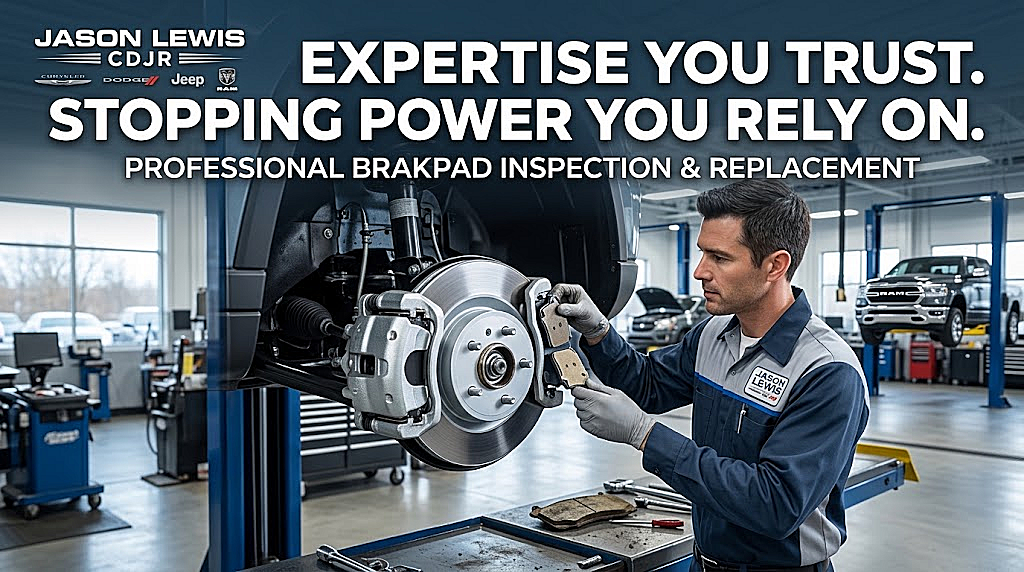
During a brake pad replacement, our technicians inspect your braking system, remove worn brake pads, install new pads, evaluate the condition of the brake rotors, inspect related hardware, and verify proper brake operation before your vehicle is returned to you.
A typical brake service may include:
Our goal is not simply to install parts, but to ensure your braking system performs safely and reliably.
Do You Need Front Brakes, Rear Brakes, or Both?
One of the most common misconceptions is that all four brake pads wear out at the same time.
In reality, that's often not the case.
The front brakes typically handle most of your vehicle's stopping force.
Because of this, front brake pads usually wear faster and often require replacement before the rear brakes.
Front brake service may be recommended when:
For many vehicles, front brake replacement is the most common brake repair.
While rear brakes generally wear more slowly, they still require regular inspection and maintenance.
Rear brake service may be necessary when:
Modern braking systems rely on all four brakes working together, making rear brake condition just as important as front brake condition.
Sometimes all four brake pads may be ready for replacement during the same visit.
This can occur when:
Our technicians will inspect the entire system and explain any recommendations before work begins.
Front Brake Replacement
- Front brake pads are worn
- Rear brakes still have adequate life remaining
- Rotor condition supports continued operation
Rear Brake Replacement
- Rear pads have reached their wear limit
- Uneven brake wear is present
- Braking performance is affected
Front and Rear Brake Replacement
- Vehicle mileage is higher
- Previous brake service was performed years ago
- Wear is relatively similar across all four wheels
How Long Does Brake Pad Replacement Take?
One of the most frequent questions we receive is:
How long will I be without my vehicle?
While every make and model is different, most brake services can be completed in just a few hours.
| Service | Typical Service Time |
|---|---|
| Front Brake Pad Replacement | 1-2 Hours |
| Rear Brake Pad Replacement | 1-2 Hours |
| Front & Rear Brake Replacement | 2-4 Hours |
Actual repair times can vary depending on:
- Vehicle make and model
- Rotor condition
- Brake system design
- Parts availability
- Additional repairs required
If replacement rotors, calipers, hardware, or brake fluid service are needed, additional time may be required.
Did You Know?
Your front brakes typically perform 60% to 80% of your vehicle's stopping work.
That's why front brake pads commonly wear out before rear brake pads. Driving habits also play a major role. Frequent stop-and-go traffic, aggressive braking, towing, mountain driving, and carrying heavy loads can all accelerate brake wear.
Two identical vehicles can experience dramatically different brake pad life based solely on how they are driven.
Not All Brake Pads Are Created Equal
Many drivers are surprised to learn that brake pads are available in different materials.
The right brake pad depends on:
- The type of vehicle you drive
- How you use your vehicle
- Whether you tow or haul
- Your expectations for longevity
- Your preferences regarding brake dust and noise
Choosing the right brake pad can improve both performance and overall ownership experience.
Brake Pad Material Comparison
| Brake Pad Type | Best For | Longevity | Noise | Dust | Towing & Hauling |
|---|---|---|---|---|---|
| Organic | Light commuting | ★★★☆☆ | ★★★★★ | ★★★☆☆ | ★★☆☆☆ |
| Semi-Metallic | Trucks & SUVs | ★★★★☆ | ★★★☆☆ | ★★☆☆☆ | ★★★★★ |
| Ceramic | Daily drivers seeking longevity | ★★★★★ | ★★★★★ | ★★★★★ | ★★★★☆ |
Organic Brake Pads
Organic brake pads are manufactured using non-metallic materials and are often chosen for their affordability and quiet operation.
Advantages
- Typically lower initial cost
- Quiet braking performance
- Smooth pedal feel
Considerations
- Faster wear in demanding conditions
- Less suitable for heavy towing
- Shorter overall lifespan than some alternatives
These pads are commonly found on lighter vehicles and daily commuter applications.
Semi-Metallic Brake Pads
Semi-metallic brake pads contain various metals designed to improve durability and heat management.
Advantages
- Strong stopping performance
- Excellent heat resistance
- Durable under demanding conditions
- Common choice for trucks and SUVs
Considerations
- Can be slightly noisier
- May generate more brake dust
- Can create more rotor wear over time
For many truck owners and drivers who tow regularly, semi-metallic pads offer an excellent balance of performance and durability.
Ceramic Brake Pads
Ceramic brake pads have become increasingly popular because they provide exceptional comfort and longevity.
Advantages
- Long service life
- Very quiet operation
- Low brake dust
- Consistent braking performance
Considerations
- Higher upfront investment
- May not be necessary for every application
Many drivers find ceramic pads provide the best overall ownership experience because they typically last longer and help keep wheels cleaner.
Truck Owner Insight: Why Brake Pad Selection Matters
If you drive a truck, brake pad selection can have a significant impact on performance and operating costs.
A truck towing a boat, camper, enclosed trailer, utility trailer, or work equipment places far greater demand on the braking system than a vehicle used only for commuting.
Additional weight creates:
- Increased brake temperatures
- Faster pad wear
- Greater stopping demands
- More stress on brake components
This is why one truck owner may replace brake pads at 35,000 miles while another may get substantially more life from the same vehicle.
Selecting the appropriate brake pad material can help improve stopping performance, increase durability, and reduce long-term ownership costs.
How Long Do Brake Pads Last?
Brake pad lifespan varies considerably depending on driving habits and vehicle usage.
Factors that affect brake wear include:
- City versus highway driving
- Traffic conditions
- Vehicle weight
- Driving style
- Climate and terrain
- Towing frequency
- Brake pad material
Many drivers replace brake pads between 30,000 and 70,000 miles, but every vehicle is different.
Routine inspections are the best way to determine remaining brake life and avoid unexpected repairs.
Frequently Asked Questions
Why are my brakes squeaking?
Brake noise can be caused by normal wear, moisture, glazing, dust buildup, or worn brake components. A professional inspection can determine the exact cause.
Should brake rotors be replaced with brake pads?
Not always. Rotors should be inspected during every brake service to determine whether resurfacing or replacement is recommended.
Are ceramic brake pads worth the additional cost?
Many drivers appreciate their longer service life, quiet operation, and low dust production. The best choice depends on your vehicle and driving habits.
What brake pads are best for towing?
Many truck owners benefit from premium semi-metallic brake pads because they are designed to handle higher temperatures and heavier loads.
Can worn brake pads damage my vehicle?
Yes. Driving with severely worn brake pads can accelerate rotor wear and potentially increase repair costs.
Schedule Your Brake Inspection Today
Your brakes are one of the most critical safety systems on your vehicle. Whether you're hearing unusual noises, feeling vibrations, or simply want to know how much brake life remains, our team is here to help.
- Schedule a brake inspection today and let our factory-trained technicians help keep your vehicle stopping safely and performing at its best.
Schedule your brake inspection today.
Schedule Service