


Chrysler, Dodge, Jeep & Ram Brake Repair in Sparta
Chrysler, Dodge, Jeep & Ram Brake Repair in Sparta, TN
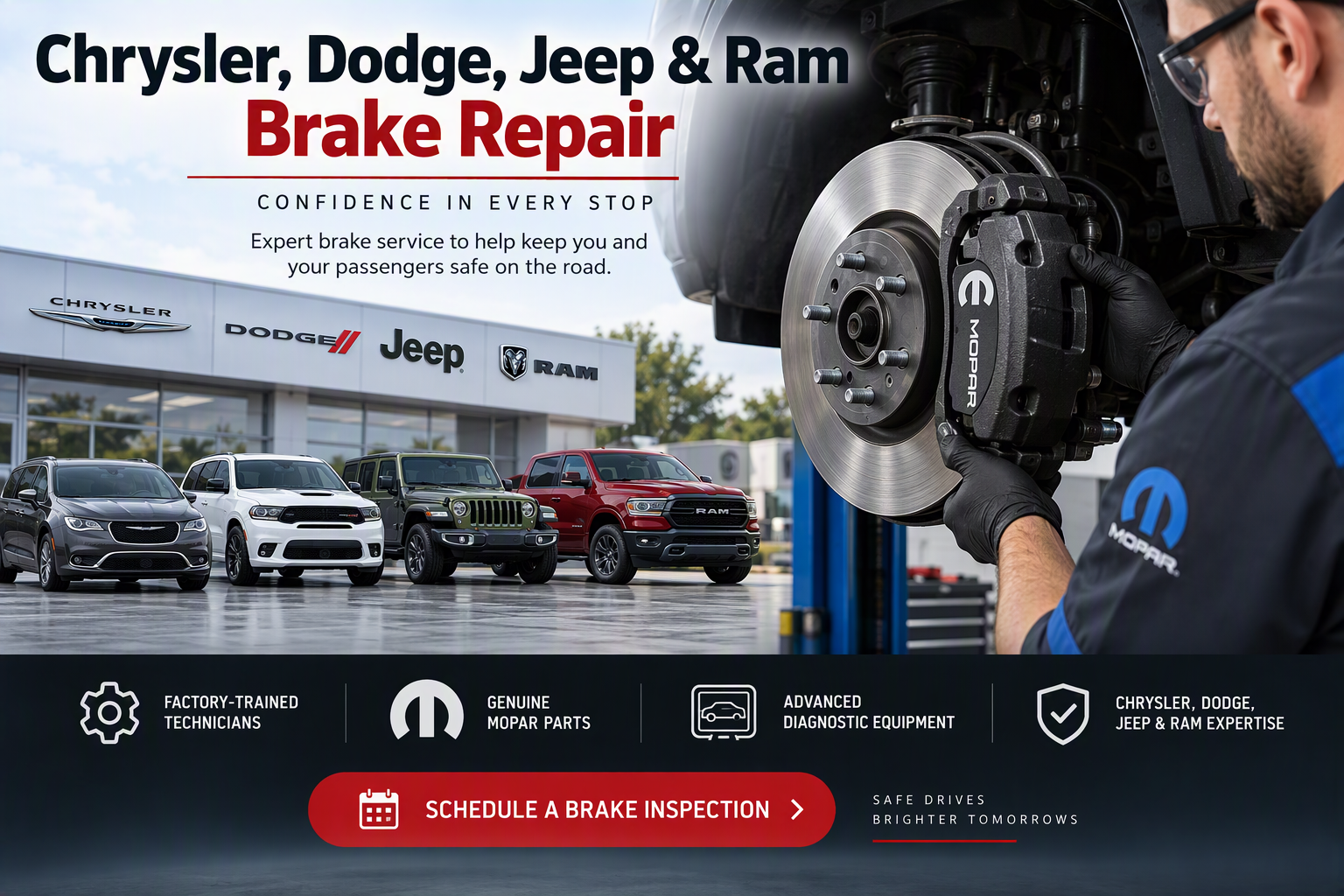
Your vehicle's braking system plays an important role in helping you maintain control, respond to changing road conditions, and stop safely when it matters most. Whether you're hearing unusual noises, feeling vibrations while braking, noticing a warning light, or simply questioning your vehicle's braking performance, the service team at Jason Lewis Automotive can help identify the source of the concern and recommend the appropriate repair.
Our factory-trained technicians service Chrysler, Dodge, Jeep, and Ram vehicles using advanced diagnostic equipment and quality parts designed to help keep your braking system performing properly.
Not Sure What's Wrong With Your Brakes?
Brake problems can originate from several different components within the braking system. In some cases, the same symptom may have multiple possible causes, making a professional diagnosis an important first step.
For example, a squealing noise could indicate worn brake pads, while a vibration may be related to the brake rotors or another component. A warning light could point to a brake fluid issue, an ABS concern, or another system fault.
Before recommending repairs, our technicians perform a thorough inspection to determine what is actually causing the problem.
- Comprehensive brake inspections
- Brake maintenance and repair services
- Genuine Mopar parts
- Advanced diagnostic equipment
- Chrysler, Dodge, Jeep & Ram expertise
Common causes of brake concerns may include:
Common Signs Your Vehicle May Need Brake Repair
Squealing or Grinding Brakes
Brake noises are often one of the first signs something may need attention. While some sounds may be caused by normal wear indicators, persistent squealing, grinding, or scraping noises should be inspected.
Vehicle Pulling While Braking
If your vehicle pulls to one side during braking, the issue may be related to brake system performance, uneven braking force, or another component affecting vehicle control.
Vibrations When Braking
A vibration felt through the brake pedal or steering wheel could indicate rotor wear or another condition that affects braking performance.
Soft or Spongy Brake Pedal
A brake pedal that feels soft, spongy, or unusually low may indicate a hydraulic concern that should be evaluated promptly.
Increased Stopping Distance
If your vehicle requires more distance to come to a complete stop than it once did, a brake inspection may be recommended.
Brake Warning Light
Brake warning lights can indicate concerns involving brake fluid levels, ABS components, sensors, or other braking system issues.
Burning Odors or Excessive Heat
Excessive heat or unusual odors from the braking system may indicate a component that is not operating properly and should be inspected.
Can I Still Drive If My Brakes Are Making Noise?
Some brake noises may be caused by normal operating conditions or component wear. However, other noises can signal developing brake system problems that should not be ignored.
When Brake Noise May Be Minor
Occasional sounds under certain driving conditions do not always indicate a serious issue.
When Brake Noise Requires Attention
Persistent squealing, scraping, grinding, or metal-on-metal noises should be inspected to determine the source.
Warning Signs You Should Not Ignore
Brake warning lights, reduced stopping power, unusual pedal feel, burning odors, vibrations, or grinding noises are all reasons to schedule a brake inspection.
Whenever you're unsure, it is better to have the braking system inspected than to ignore a problem that could affect your ability to stop safely.
Why a Proper Brake Diagnosis Matters
The same symptom can sometimes have different causes. Replacing the wrong component may not correct the issue and can result in unnecessary expense.
Common Examples
| Symptom | Possible Causes |
|---|---|
| Squealing | Brake pads, hardware, rotor conditions |
| Vibration | Rotors, wheel components, suspension concerns |
| Soft Pedal | Fluid issues, hydraulic concerns, air in the system |
| Warning Light | ABS faults, sensors, fluid level concerns |
A proper diagnosis helps ensure the correct repair is performed the first time.
What Happens If You Wait?
Delaying brake service may allow a minor issue to become a more involved repair.
Increased Repair Costs
Addressing problems early may help prevent additional wear and reduce the likelihood of more extensive repairs.
Accelerated Rotor Wear
Worn brake pads can cause excessive rotor wear if replacement is delayed.
Reduced Braking Performance
Brake system concerns may affect how effectively and consistently your vehicle slows and stops.
Additional Component Damage
An issue affecting one component can sometimes create added stress on other parts of the braking system.
Risks to You, Your Passengers, and Other Drivers
Your vehicle's braking system helps you respond to changing traffic conditions, road hazards, and unexpected situations on the road. As brake components wear or develop problems, braking performance may be affected, which can increase stopping distances and reduce driver confidence. Addressing brake concerns early can help protect you, your passengers, and others who share the road.
Brake Components and Services We Inspect & Repair
Every brake concern is different. During the inspection process, our technicians evaluate the braking system to identify the root cause of the issue. Depending on our findings, repairs may involve one or more components within the system.
Every Brake Repair Starts With a Professional Inspection
Before recommending any repairs, our technicians inspect the braking system to identify the source of the concern.
Visual Inspection
Key brake components are evaluated for wear, damage, and overall condition.
System Testing
Technicians assess braking performance and inspect critical system functions.
Diagnosis
The root cause of the concern is identified whenever possible.
Repair Recommendations
After the inspection is complete, we'll explain our findings and discuss available repair options.
Frequently Asked Questions About Brake Repair
(Click + for the answer)
Brake squeaking can be caused by worn brake pads, brake hardware, rotor conditions, moisture, or other factors. A professional inspection can help identify the cause.
Brake pad life varies based on driving habits, vehicle type, traffic conditions, and brake pad material.
Not always. Rotor condition should be evaluated during the inspection process to determine whether resurfacing or replacement is recommended.
Hydraulic concerns, brake fluid issues, air in the system, or other brake-related problems may contribute to a soft pedal.
Repair times vary depending on the type of service being performed and the condition of the vehicle.
A brake inspection typically includes evaluating brake pads, rotors, calipers, brake fluid, brake lines, hoses, and other related components as needed.
Why Choose Jason Lewis Automotive for Brake Repair?
When it comes to maintaining your Chrysler, Dodge, Jeep, or Ram vehicle, experience and proper diagnosis matter.
Whether your vehicle needs brake maintenance, diagnosis, or repair, our goal is to help keep your braking system performing properly.
Our service department offers:
- Factory-trained technicians
- Genuine Mopar parts
- Advanced diagnostic equipment
- State-of-the-art service facility
- Friendly customer service
- Convenient online scheduling
Are Your Brakes Safe?
Whether you're hearing unusual noises, feeling vibrations, noticing a warning light, or simply questioning your vehicle's braking performance, our technicians can inspect the system and help identify the source of the concern.
Your brakes help protect you, your passengers, and everyone sharing the road with you. If something doesn't feel right, schedule a professional brake inspection today.
Don't ignore brake concerns. Let our team help determine what's causing the problem and recommend the appropriate repair for your Chrysler, Dodge, Jeep, or Ram vehicle.