



Flat Tire Repair
Chrysler Dodge Jeep Ram Tire Dealer Sparta TN
Fast, Professional Tire Repair to Help Keep You Safe on the Road
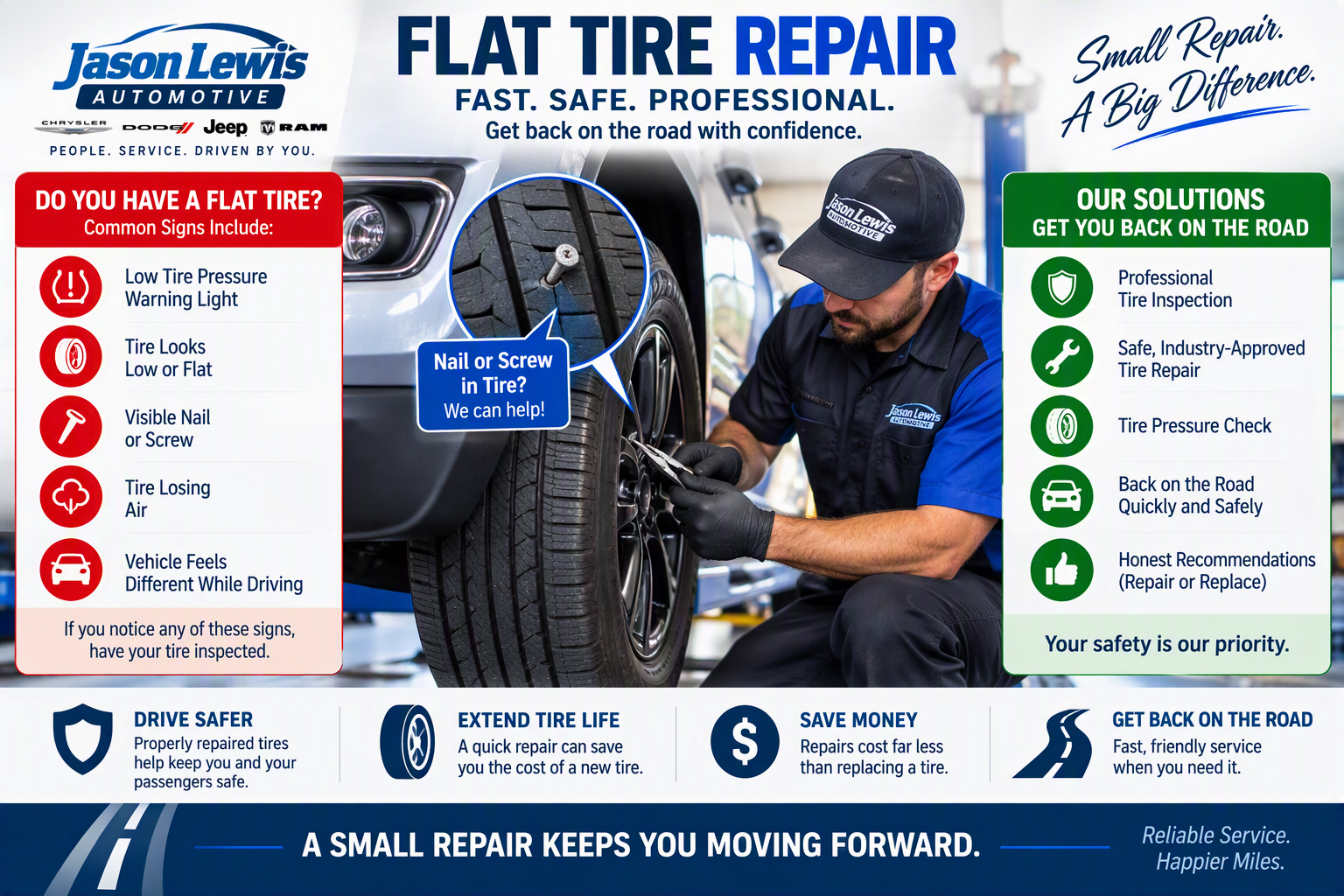
A flat tire can happen anywhere, whether you're leaving the grocery store, commuting to work, or heading out on a family trip. If your tire is losing air, your tire pressure warning light is illuminated, or you've discovered a nail or screw in your tire, Jason Lewis Automotive can help with professional tire evaluation and repair, if possible.
Our technicians inspect, diagnose, and repair many tire problems safely and efficiently so you can get back on the road with confidence.
Schedule a Tire Inspection TodayFlat Tire? Here's What To Do
Discovering a flat tire can be frustrating, but knowing what to do next can help protect your safety and prevent additional damage.
If You Notice a Flat Tire:
- Move to a safe location if you're driving.
- Turn on your hazard lights.
- Inspect the tire from a safe distance.
- If you have a spare tire and are comfortable changing it, follow your vehicle manufacturer's recommendations.
- If you do not have a spare, are in an unsafe location, or are unsure about the condition of the tire, contact roadside assistance or towing.
Avoid Driving on a Flat Tire
Driving on a flat or severely underinflated tire can damage:
- The tire itself
- The wheel
- TPMS sensors
- Suspension components
In many situations, a tire that could have been repaired may require replacement after being driven on while flat.
Need Assistance?
If your vehicle cannot be driven safely, contact Jason Lewis Automotive and we'll help coordinate towing assistance and inspect the tire upon arrival.
Not Sure If Your Tire Has a Leak?
Sometimes a tire isn't completely flat but repeatedly loses air.
If you notice:
- A tire that looks lower than the others
- A TPMS warning light
- Frequent pressure loss
- A nail or screw in the tread
- Changes in vehicle handling
It may be time for an inspection.
Many tire leaks result from:
- Small punctures
- Valve stem leaks
- Wheel sealing issues
- Bead leaks
- Tire damage
A simple inspection today may prevent a larger problem tomorrow.
Did You Know?
Many slow tire leaks develop gradually and can go unnoticed for weeks or even months.
A tire that requires air every few days often has a puncture or leak that should be professionally inspected. Finding and repairing the issue early may help prevent tire replacement.
Jason Lewis Automotive Pro Tip
If a tire appears noticeably lower than the others, don't assume it's "probably okay."
Driving on an underinflated tire can create internal damage that may not be visible from the outside. Having the tire inspected early may allow a simple repair and help avoid the cost of tire replacement.
As the saying goes, it's always better to be safe than sorry.
Can Every Flat Tire Be Repaired?
Not every flat tire requires replacement.
Many punctures caused by nails, screws, or road debris can be safely repaired when the damage falls within industry repair guidelines.
Our technicians inspect every tire and recommend the safest option based on its condition.
What Happens When You Bring Us a Flat Tire?
Step 1
Inspect the tire and verify the source of air loss.
Step 2
Determine the location and size of the damage.
Step 3
Remove the tire and perform an internal inspection.
Step 4
Evaluate whether the tire can be repaired safely.
Step 5
Repair or replace the tire as needed.
Step 6
Test for leaks and verify proper inflation.
Step 7
Get you safely back on the road.
Common Tire Problems We Fix
Nail and Screw Punctures
Slow Air Leaks
Valve Stem Leaks
Wheel Leaks
Bead Leaks
TPMS Concerns
Tire Pressure Problems
Signs Your Tire Needs Immediate Attention
Rapid Air Loss
Visible Nail or Screw
Flat Tire
Low Tire Pressure Warning Light
Sidewall Damage
Tire Bulges
Excessive Vibration
Unusual Tire Wear
When a Tire Cannot Be Repaired
Replacement may be necessary when damage involves:
- Sidewall punctures
- Shoulder damage
- Large punctures
- Severe tread wear
- Internal tire damage
- Previous improper repairs
Our technicians will explain your repair and replacement options clearly.
Road Hazard Protection & Tire Coverage
Many tire problems are caused by road hazards such as:
- Nails
- Screws
- Potholes
- Construction debris
- Sharp objects
If your tires are covered by a road hazard protection program, our team can help determine whether repair or replacement benefits may apply.
The True Cost of Ignoring a Flat Tire
A small air leak today can become a large expense tomorrow.
Ignoring a tire problem can lead to:
Tire failure
Wheel damage
Increased tire wear
Reduced fuel economy
Poor vehicle handling
Tire replacement that may have been avoided
Prompt inspections often save money and improve safety.
Tire Repair vs. Tire Replacement
Repair May Be Possible When:
- Damage is within the repairable tread area
- The puncture meets repair guidelines
- The tire is otherwise in good condition
Replacement May Be Recommended When:
- Sidewall damage exists
- Internal damage is found
- The tire is excessively worn
- Damage exceeds repair guidelines
How Often Should Tire Pressure Be Checked?
Monthly tire pressure inspections are one of the easiest ways to protect your vehicle.
Benefits include:
Longer Tire Life
Improved Fuel Economy
Better Handling
More Even Tire Wear
Improved Safety
Frequently Asked Questions
Many standard tire puncture repairs take about 30 to 60 minutes, depending on the damage, the tire's condition, and the service center's workload. Additional time may be needed if the tire must be replaced or other damage is found. Contact Jason Lewis Chevrolet to schedule tire service and ask about current availability.
A plug alone is not considered a complete, proper tire repair. A safe repair generally requires removing the tire from the wheel, inspecting the inside for hidden damage, and using an approved repair method that seals the puncture from the inside and fills the injury channel. Not every puncture can be repaired, so have a qualified tire technician inspect the tire before driving on it.
Driving on a tire that is losing air can damage the tire, affect vehicle handling, and increase the risk of a blowout. If the tire is visibly flat or losing air quickly, do not continue driving. Pull over in a safe location, away from traffic, and arrange roadside assistance or a spare tire change if you can do so safely. If the tire is losing air slowly, check the pressure and follow your vehicle manufacturer's guidance. Have the tire inspected as soon as possible.
If you find a flat tire in a parking lot, avoid driving on it. If you can safely install your vehicle's spare tire and know how to do so, follow the instructions in your owner's manual. Otherwise, contact roadside assistance for help. Do not attempt to change a tire near moving traffic or in an unsafe location. Once the vehicle is in a safe place, have the damaged tire inspected to determine whether it can be repaired or needs replacement.
A tire may need replacement if the puncture is in the sidewall or shoulder, the damage is too large for an approved repair, or the tire has been driven while severely underinflated or flat. Replacement may also be necessary if the tire has excessive tread wear, exposed cords, bulges, or other structural damage. A qualified tire technician can inspect the tire and recommend the safest option.
The Tire Pressure Monitoring System (TPMS) warning light alerts you when one or more tires may be underinflated. Check the tire pressures when the tires are cold and inflate them to the levels listed on the label inside the driver's door, not the maximum pressure printed on the tire. If a tire is visibly flat or losing air, do not drive on it. If the light stays on after correcting the pressure, or flashes before remaining illuminated, the system may need inspection. Schedule tire service at Jason Lewis Chevrolet to help identify the cause and check your tires.
Related Services
Tire Sales
Tire Rotation
Tire Balancing
Wheel Alignment
TPMS Service
Tire Pressure Checks
Get Back on the Road Safely
Whether you've discovered a flat tire, a slow leak, a TPMS warning light, or simply want peace of mind, our team is here to help.
Why Choose Jason Lewis Automotive?
- Professional Tire Inspection
- Industry-Approved Repairs
- Tire Pressure Expertise
- Honest Recommendations
- Quality Replacement Options
- Fast, Friendly Service
You don't need to know what's causing the problem. That's our job.
If you're concerned about a tire, stop by and let us inspect it. It's always better to be safe than sorry.