





Tire Balancing Services
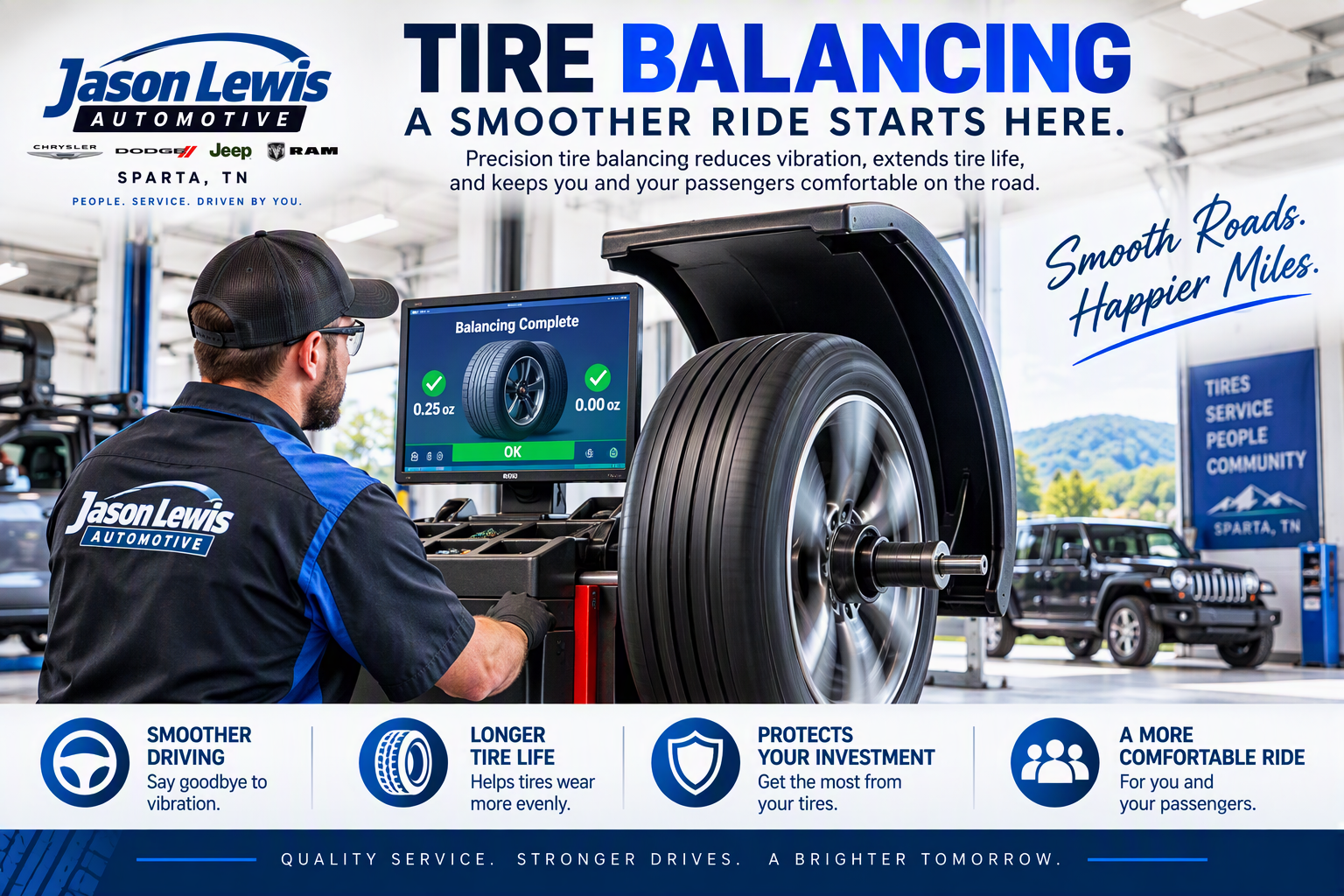
Protect Your Tire Investment and Enjoy a Smoother Ride
Your tires represent a significant investment in your vehicle's safety, comfort, and performance. Proper tire balancing helps protect that investment by reducing vibration, promoting even tire wear, and delivering the smooth ride your vehicle was designed to provide.
If your steering wheel shakes, your vehicle vibrates at highway speeds, or your tires are wearing unevenly, tire balancing may be the solution.
At Jason Lewis Automotive, we use precision balancing equipment to help maximize tire life, improve ride quality, and keep your vehicle performing at its best.
Schedule Your Tire Balancing Service TodayUnderstanding Tire Balancing
Many drivers know what wheel alignment is, but fewer understand tire balancing.
Every tire and wheel assembly has slight weight variations. Tire balancing compensates for those differences by precisely placing weights on the wheel assembly so the tire rotates smoothly and evenly.
Proper balancing helps:
- Reduce vibration
- Improve ride comfort
- Extend tire life
- Protect suspension components
- Enhance overall vehicle performance
A properly balanced tire rolls smoothly and consistently, creating a more comfortable and predictable driving experience.
How Tire Balancing Works
No tire and wheel assembly is perfectly uniform.
As a tire rotates, even small weight differences can create vibration. Those vibrations are often most noticeable at highway speeds.
Using computerized balancing equipment, our technicians identify where weight correction is needed and install balancing weights to offset the imbalance.
The result is a tire and wheel assembly that rotates smoothly, reducing vibration and improving ride quality.
Did You Know?
A tire can be perfectly aligned and still cause vibration if it is out of balance.
Many drivers assume all vehicle vibrations are alignment-related when tire balancing is often the actual solution.
Balancing and alignment are two different services, but both play an important role in tire performance and vehicle comfort.
Jason Lewis Automotive Pro Tip
If your steering wheel vibrates primarily between 55 and 75 mph but feels normal at lower speeds, tire imbalance may be contributing to the problem.
Addressing vibration early can help reduce tire wear and protect your investment.
Why Is My Steering Wheel Shaking?
One of the most common signs of tire imbalance is steering wheel vibration, particularly at highway speeds.
If the vibration:
tire balancing may be the cause.
However, vibration can sometimes be caused by other issues such as tire wear, wheel damage, suspension concerns, or steering component wear.
Our technicians can inspect the vehicle and help identify the source of the vibration.
Protecting Your Tire Investment
Tires are not inexpensive, and most drivers expect them to deliver years of reliable service.
Proper tire balancing helps protect your investment by reducing irregular wear and helping tires maintain consistent contact with the road surface.
When tire vibration is ignored, excessive wear can develop, shortening tire life and potentially leading to premature replacement.
Balancing your tires as recommended is one of the simplest ways to maximize the value of every mile you drive.
Understanding Wheel Weights
Tire balancing is accomplished by placing small balancing weights on the wheel assembly to compensate for natural weight variations within the tire and wheel.
These weights help ensure the tire rotates smoothly and evenly at all speeds.
When the tire and wheel assembly is properly balanced, drivers enjoy:
Although wheel weights are small, they play a significant role in helping protect your tires and maintain a comfortable ride.
Can Wheel Weights Fall Off?
Yes.
Wheel weights are designed to remain securely attached, but over time they can occasionally become damaged or dislodged.
Several factors may contribute to weight loss:
- Pothole impacts
- Railroad crossings
- Speed bumps
- Curb contact
- Road debris
- Corrosion
- Tire service procedures
If a wheel weight comes off, the tire may no longer rotate smoothly, creating vibration that can often be felt through the steering wheel or vehicle seat.
Did You Know?
A missing wheel weight can sometimes create a vibration almost immediately.
Many drivers notice the problem at highway speeds and assume something is wrong with the steering or suspension system when the true cause may be a tire that is simply out of balance.
Jason Lewis Automotive Pro Tip
When your vehicle is in for tire rotations, alignments, or other tire-related services, ask your technician to inspect for missing wheel weights.
A quick inspection can often identify balancing concerns before they lead to unnecessary tire wear or an uncomfortable driving experience.
Common Tire Balancing Problems We Fix
Steering Wheel Shake
Vibration felt through the steering wheel is one of the most common signs of tire imbalance.
Highway-Speed Vibration
Many balancing concerns become most noticeable at higher speeds.
Vehicle Shaking
Some imbalances can be felt throughout the vehicle, including the seats and floorboards.
Uneven Tire Wear
Improper balance may contribute to irregular wear patterns over time.
Missing Wheel Weights
Wheel weights can occasionally become damaged or lost.
New Tire Installation
Every new tire installation should include balancing service.
Signs Your Tires May Be Out of Balance
Steering Wheel Vibrates
Vehicle Shakes at Highway Speeds
Uneven Tire Wear
Increased Road Noise
Ride Quality Changes
Recent Tire Installation
Missing Wheel Weight
Vehicle Feels Less Smooth Than Usual
What Causes Tires to Go Out of Balance?
Several factors can affect tire balance over time.
Common causes include:
- Normal tire wear
- Lost wheel weights
- Potholes and road impacts
- Tire repairs
- Wheel damage
- Seasonal tire changes
- New tire installation
Even tires that were perfectly balanced when installed can develop imbalance as they wear.
Professional Tire Balancing Service
At Jason Lewis Automotive, our tire balancing process includes:
Tire & Wheel Inspection
Tread Wear Evaluation
Tire Pressure Check
Computerized Balance Measurement
Precision Weight Placement
Verification Testing
Final Quality Inspection
Our goal is to deliver a smooth ride while helping maximize the life of your tires.
Tire Balancing vs. Wheel Alignment
Many drivers confuse tire balancing and wheel alignment because both involve the tires and wheels.
Tire Balancing
Corrects weight distribution within the tire and wheel assembly.
Common symptoms include:
- Steering wheel vibration
- Vehicle shake
- Highway-speed vibration
Wheel Alignment
Adjusts suspension and steering angles.
Common symptoms include:
- Vehicle pulls left or right
- Crooked steering wheel
- Uneven tire wear
The Bottom Line
Tire balancing addresses vibration.
Wheel alignment addresses directional and tire wear concerns.
Some vehicles may benefit from both services.
The True Cost of Ignoring Vibration
A minor vibration may seem like an inconvenience, but it can have long-term consequences.
Ignoring tire balance problems may contribute to:
- Premature tire wear
- Reduced ride comfort
- Increased suspension stress
- Driver fatigue
- Shortened tire life
Small balancing issues often become larger and more expensive tire problems when ignored.
How Often Should Tires Be Balanced?
Tire balancing is commonly recommended:
- Whenever new tires are installed
- When vibration develops
- After tire repair
- Following wheel damage
- During seasonal tire changes
- Whenever unusual tire wear is observed
Routine inspections help ensure your tires continue performing properly throughout their lifespan.
Benefits of Proper Tire Balancing
Frequently Asked Questions
A tire imbalance is one of the most common causes of steering wheel vibration at higher speeds.
In many cases, yes. Tire balancing is specifically designed to address vibration caused by uneven weight distribution.
Balancing is recommended whenever vibration develops, when new tires are installed, and whenever balancing concerns are identified.
Yes. Proper balancing can help reduce irregular wear and extend tire life.
Yes. Wheel weights can occasionally become damaged or dislodged due to road impacts, potholes, railroad crossings, speed bumps, or other conditions.
Yes. New tires should always be balanced during installation.
Absolutely. Many drivers notice a smoother and more comfortable ride after balancing service.
Related Services
- Tire Rotation
- Wheel Alignment
- Flat Tire Repair
- Tire Sales
- Steering Components
- Shocks & Struts
Enjoy a Smoother Ride
If your vehicle vibrates, your steering wheel shakes, or your tires are wearing unevenly, our technicians can determine whether tire balancing is needed.
Why Choose Jason Lewis Automotive?
Your tires are an important investment. Proper tire balancing helps protect that investment while delivering the smooth, comfortable ride your vehicle was designed to provide.